
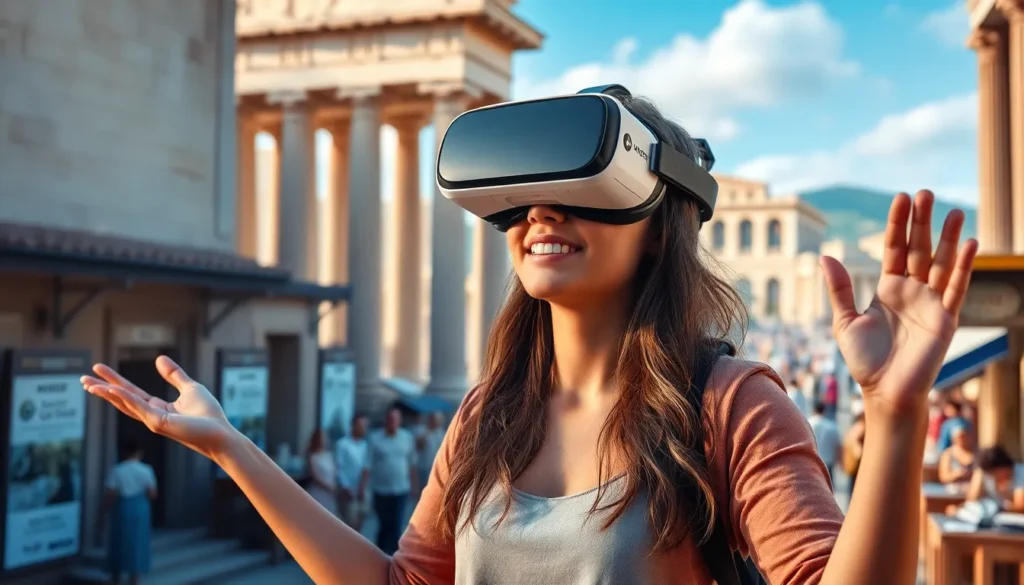
Imagine stepping into a time machine without the risk of a paradox or accidentally meeting your great-great-grandfather. VR historical exploration offers just that—a chance to walk through ancient Rome, witness the signing of the Declaration of Independence, or even dodge dinosaurs, all while lounging in your pajamas. It’s like a history class that actually gets you excited, minus the chalk dust and awkward group projects.
As technology leaps forward, virtual reality is transforming how we experience history. Instead of reading about the past, he can now live it. With immersive experiences that engage the senses, VR doesn’t just tell stories; it lets users become part of them. So grab your headset and get ready to explore history in a way that’s both entertaining and enlightening. Who knew learning about the past could be this much fun?
Overview of VR Historical Exploration
VR historical exploration provides unique access to immersive experiences of pivotal moments in history. Users engage in environments that replicate significant events, enhancing the understanding of various historical contexts. Ancient civilizations such as Rome and Greece come alive through detailed reconstructions, allowing visitors to stroll through ancient streets and experience life as it was centuries ago.
Educational institutions adopt VR technology to make history lessons more interactive. This approach promotes active learning, as students explore historical scenes firsthand. By stepping into immersive environments, learners better retain information and develop a deeper connection to historical events and figures.
Additionally, VR experiences often include detailed narration and contextual information. Such narratives enhance the user’s understanding of the time period, cultural practices, and key events. Historical accuracy remains a priority for developers, ensuring that the experiences reflect scholarly research and insights.
Innovative platforms also enable collaborative exploration of historical sites. Users can connect with others globally, discussing insights and perspectives while experiencing history together. This social aspect fosters community engagement and shared learning.
Reports indicate a growing trend in the use of VR for historical exploration. The technology’s evolution offers enhanced graphics, soundscapes, and interactivity, making experiences more engaging. As VR becomes more accessible, both individual users and educational institutions continue to explore its potential in teaching history.
Embracing VR for historical exploration holds the promise of transforming traditional narratives into multi-dimensional experiences. This transformation encourages curiosity and enriches cultural understanding, proving crucial for future generations.
Benefits of VR Historical Exploration
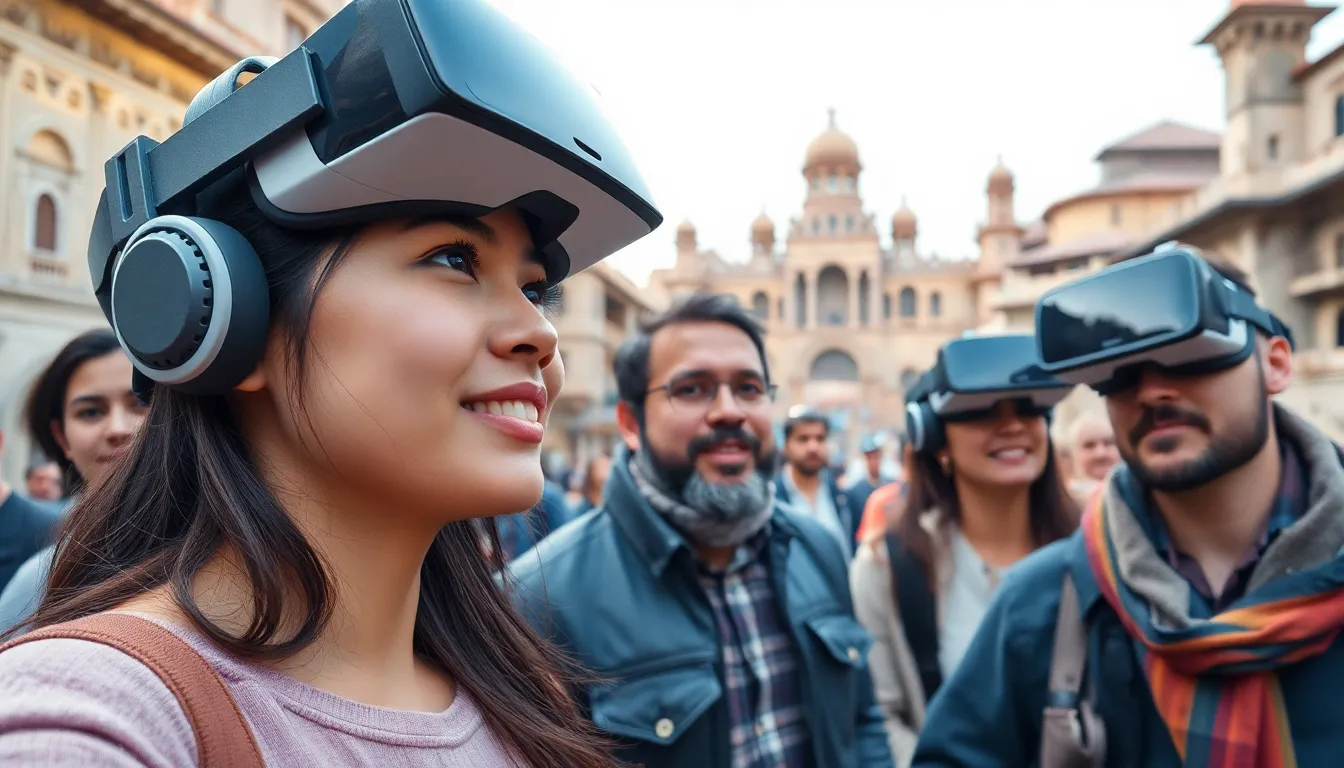
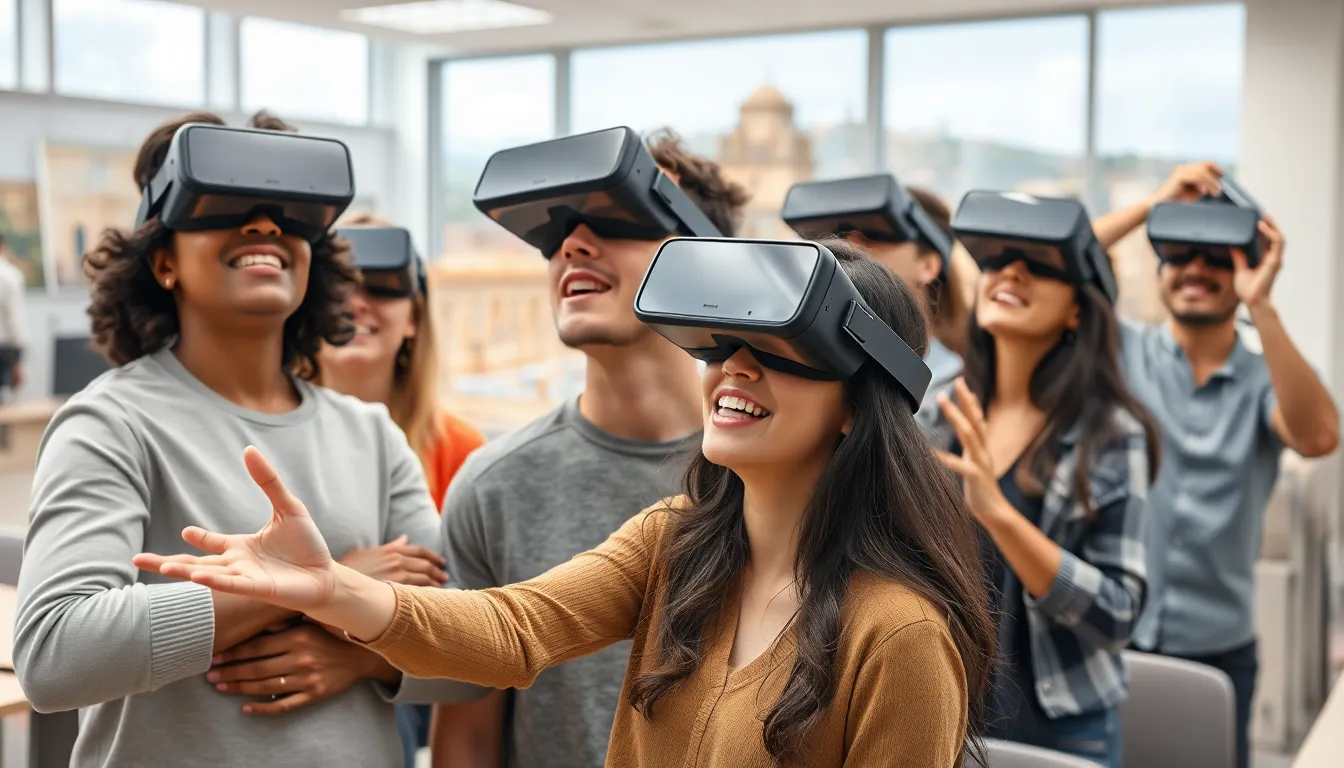
VR historical exploration offers distinct benefits that enhance the understanding of history. Users engage with the past in immersive ways, making learning more impactful.
Enhanced Learning Experiences
Immersive environments support deeper learning. Individuals can visualize historical events, improving their comprehension. Engaging narratives provide insights into cultures and contexts, enhancing retention. Studies indicate learners remember 70% of information when actively engaged. Such experiences stimulate curiosity, prompting further exploration of topics. Educational institutions report improved student participation in history classes when VR is integrated into the curriculum.
Engaging Interactive Environments
Interactive environments captivate users by allowing them to explore vibrantly recreated historical settings. Users can walk through ancient cities, experiencing architecture and daily life firsthand. Engaging simulations often include role-playing elements, encouraging active involvement. Multiple entry points enable users to navigate different aspects of history, fostering a personal connection. Collaborative experiences allow groups to share insights and learn from one another, promoting discussion and exchange of ideas.
Popular VR Historical Exploration Platforms
Many platforms offer innovative solutions for exploring history through virtual reality. These experiences provide user-friendly access to significant events and environments.
Software and Apps
Numerous software options enhance VR historical exploration. Platforms like Oculus Quest and Steam VR host applications that simulate ancient civilizations and pivotal moments in history. Apps such as “Historical VR” allow immersion in detailed reconstructions, showcasing accurate cultural practices. Educational programs use this software to facilitate interactive learning experiences. Users often appreciate features like guided tours and narrated insights, making connections to contextual knowledge more straightforward. Popular titles include “Time Traveler” and “VR Museum of Fine Art,” which engage users in vibrant storytelling.
Hardware Innovations
Game-changing hardware has greatly influenced VR historical exploration. Headsets like the Meta Quest 2 and HTC Vive Pro deliver immersive visuals and soundscapes. These devices support high-resolution graphics that breathe life into ancient settings. Hand controllers enable realistic interactions with historical artifacts while tracking movements accurately. Accessories such as haptic feedback vests help users feel sensations that replicate real-life experiences. As technology continues to evolve, innovations promise even richer and more engaging explorations of history.
Challenges in VR Historical Exploration
VR historical exploration faces several challenges, including accessibility for users and concerns over historical accuracy.
Accessibility and Costs
Accessibility barriers limit some users from experiencing VR historical exploration. High costs of VR hardware discourage widespread adoption since many excellent applications require expensive headsets and computers. Additionally, not everyone possesses the necessary physical space and technology, hindering engagement in many educational contexts. Schools and organizations may struggle with budget constraints, impacting their ability to invest in VR technology for historical learning. Grants and funding opportunities exist, yet obtaining financial support often proves challenging. Therefore, making VR tools affordable and accessible remains essential to broaden participation.
Historical Accuracy Concerns
Historical accuracy poses a significant challenge in VR historical exploration. Inaccurate representations can mislead users regarding facts and timelines. Developers strive to create immersive experiences, yet balancing creativity with historical fidelity presents difficulties. Scholars and historians must validate content to ensure authenticity of environments and narratives. While some platforms consult experts, gaps in information or artistic liberties can still arise. These issues spark discussions about the importance of reliable sources in educational contexts. Ensuring VR experiences reflect true historical contexts contributes to effective learning and preserves cultural heritage for future generations.
Future of VR Historical Exploration
Advancements in VR technology promise profound changes in how history is explored and understood. Emerging tools enable interactive storylines that immerse users in key historical events. These tools garner interest from educators aiming to captivate students through hands-on learning experiences.
Future developments focus on enhancing realism in virtual environments. Improved graphics and soundscapes create convincing reconstructions, making interactions feel lifelike. Furthermore, innovations in haptic feedback technology enrich users’ physical experiences, allowing them to engage with virtual historical artifacts.
Collaborative features will likely expand, promoting shared historical exploration among users. Global access to immersive experiences fosters discussions and diverse perspectives on historical events. More platforms may introduce social elements that encourage community engagement in learning.
Accessibility improvements remain crucial for wider adoption. Reducing costs associated with VR hardware will help schools and organizations integrate this technology into classrooms. Continued efforts toward affordability ensure that diverse communities can benefit from immersive historical education.
Ensuring historical accuracy while leveraging creativity remains a priority. Developers need to strike a balance between innovation and fidelity to historical facts. As more platforms collaborate with historians, users can anticipate more accurate representations of the past.
The future of VR historical exploration holds limitless potential. With ongoing advancements, users will likely engage with history in unprecedented ways. More enriched learning experiences will cultivate curiosity and deeper cultural understanding for generations to come.
VR historical exploration is redefining how people engage with the past. By immersing users in meticulously recreated environments, it fosters a deeper understanding of historical events and cultures. This innovative approach not only captivates learners but also enhances retention and participation in educational settings.
As technology advances, the potential for even more engaging experiences grows. Collaborative features and improved accessibility will further broaden the reach of VR in education. Balancing creativity with historical accuracy remains vital to ensure users receive authentic insights.
Ultimately, VR historical exploration stands to enrich cultural understanding for future generations, transforming the way history is taught and experienced.