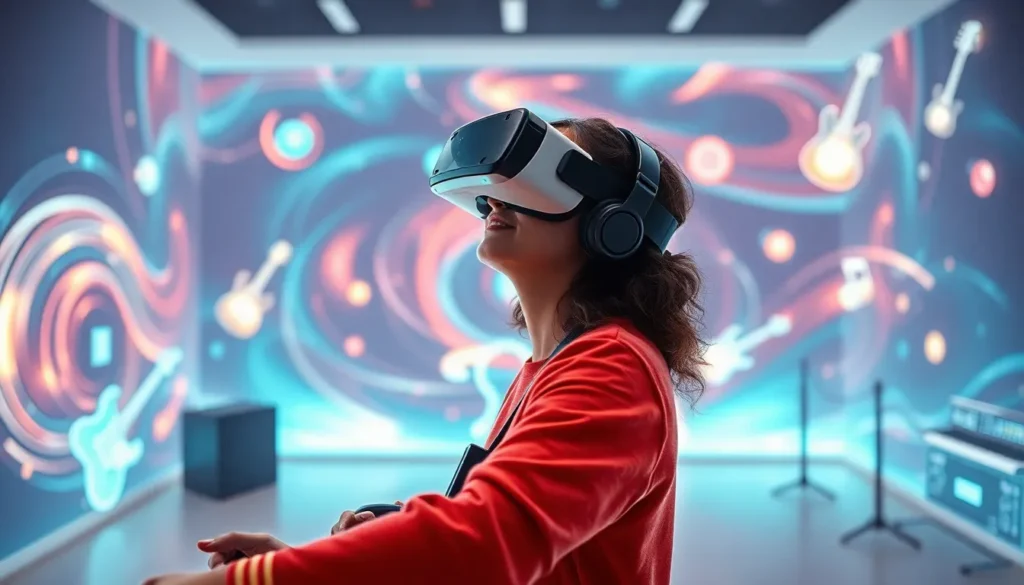
Imagine strumming a guitar that exists only in the digital realm or tapping on a virtual piano that fits in your pocket. With VR musical instruments, the boundaries of creativity stretch beyond the physical world, allowing musicians and hobbyists alike to explore soundscapes they never thought possible. It’s like having a jam session with a holographic band—no messy cables or awkward tuning required.
Overview Of VR Musical Instruments
VR musical instruments represent a significant advancement in music creation and interaction. These tools allow users to explore sound in immersive environments where creativity thrives. Musicians can manipulate sounds through gestures, making the experience deeply engaging.
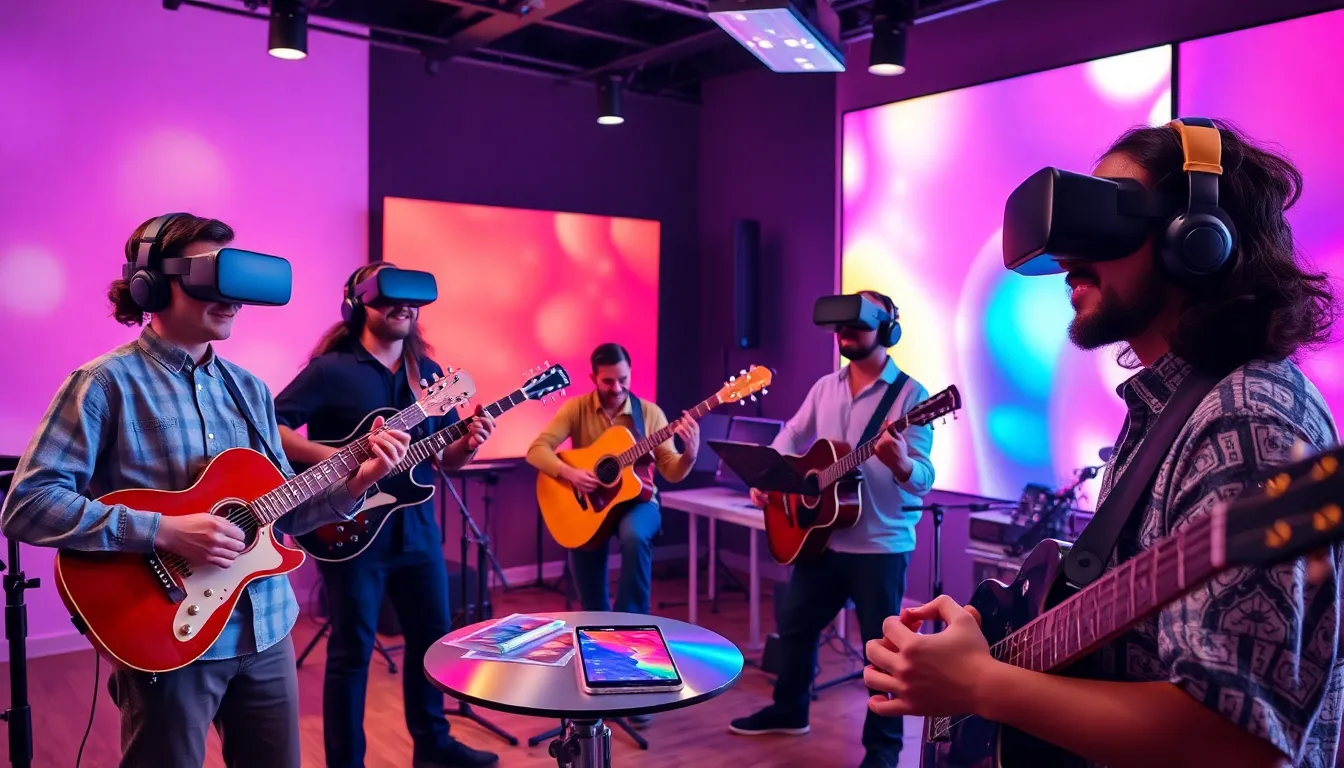
Numerous platforms offer various VR instruments that simulate traditional ones, including guitars, pianos, and synthesizers. Specific software applications, like VR music studios, enable collaboration with others in real time. Users can share virtual spaces, fostering a communal vibe often missing in solo sessions.
Each VR instrument provides unique features tailored to specific musical genres, enhancing versatility. For instance, users can design intricate soundscapes or play alongside virtual musicians, expanding musical possibilities. Some instruments include built-in tutorials to facilitate learning for beginners.
Hardware also plays a crucial role. Headsets like Oculus Quest and HTC Vive support realistic sound environments. Controllers or gloves track movements, allowing expressive performance. Similarly, audio feedback reinforces interactions with virtual objects, creating a more authentic experience.
Adoption of VR musical instruments is growing among educators and studios. They enable interactive lessons and limitless experimentation. These tools inspire creativity without the constraints of physical instruments. Consequently, a new generation of musicians embraces the digital realm, redefining the art of music creation.
Benefits Of Using VR Musical Instruments
VR musical instruments offer significant advantages that enhance the music-making experience. They provide musicians with innovative tools that facilitate the learning and creative processes.
Enhanced Learning Opportunities
VR musical instruments create immersive lessons that engage students. Instructors can demonstrate techniques visually, allowing learners to see the instrument in action. This visual component enhances comprehension and retention. Many platforms incorporate interactive tutorials, enabling users to practice in a risk-free environment. Students benefit from instant feedback, which helps them identify areas for improvement. Musicians of all skill levels can explore different genres without the constraints of physical space. The engagement and interactivity that VR offers transform traditional music education, making it more accessible for everyone.
Creative Expression
VR musical instruments unlock new avenues for creativity. Artists can experiment with sound in ways that traditional instruments cannot match. Customization options allow users to shape their musical instruments to fit their unique styles. Many applications let musicians combine genres, resulting in innovative sounds that push artistic boundaries. Sound manipulation through gestures provides a tactile experience that encourages exploration. Additionally, collaboration becomes seamless, allowing artists to connect with others globally. Immersive environments stimulate new ideas, providing inspiration that fuels their music-making process. These creative possibilities enhance the overall artistic output and redefine how individuals interact with music.
Popular VR Musical Instruments
Numerous VR musical instruments capture the interest of musicians and hobbyists. Each instrument offers unique functionalities and experiences, allowing users to explore sound in creative ways.
Violin Simulator
Violin simulators replicate the nuanced intricacies of traditional playing. Users draw a virtual bow across strings, creating a realistic sound experience. Through tracking technology, movements translate into authentic notes and vibrato. These simulators often include tutorials for learning techniques, making them suitable for beginners and experts alike. Customizable features let players adjust sound profiles, adding personal flair to compositions. Additionally, immersive environments enhance performance, allowing for both solo play and virtual orchestras.
Virtual Drums
Virtual drums deliver a dynamic drumming experience without physical constraints. Players can choose from various drum kits and styles, ranging from rock to jazz. Each virtual drum pad reacts to hits, mimicking the feel of acoustic drums. Options for recording sessions enable musicians to create complete tracks in immersive environments. Collaboration tools enhance group practices by connecting users worldwide. Some applications incorporate rhythm games, making practice engaging and fun for artists of any level.
Synthesizers
Synthesizers in VR expand creative possibilities for music production. These instruments offer diverse soundscapes through customizable waves and effects. Users manipulate parameters using intuitive interfaces, resulting in unique audio creations. Many synth applications feature pre-set sounds and plugins, catering to different genres, from electronic to ambient. Furthermore, real-time collaboration tools allow artists to experiment together, building on each other’s ideas. By blending virtual tools with traditional techniques, musicians can unlock boundless potential in sound design.
How To Get Started With VR Musical Instruments
Getting started with VR musical instruments opens up a world of creativity. Engaging with these tools requires specific hardware and software to create a seamless experience.
Required Equipment
Headsets play a crucial role in enjoying VR musical instruments. Options like the Oculus Quest and HTC Vive provide immersive environments for sound exploration. Controllers enhance interaction by tracking movements, allowing musicians to express themselves naturally. Additional peripherals, such as motion sensors, can also expand functionality, creating a more dynamic setup. Users should ensure their devices are compatible with their chosen applications for optimal performance.
Recommended Software
Several software applications support VR musical instruments, each catering to different musical preferences. Platforms like Oculus Medium and VR Music Studio offer unique features that enhance creativity and collaboration. Music genre-specific programs allow for tailored practice, providing tools for everything from electronic beats to classical performances. Users can explore real-time collaboration options, enabling connections with other musicians worldwide. Investing time in familiarizing oneself with software intricacies leads to a richer musical experience.
VR musical instruments are revolutionizing the way musicians and enthusiasts engage with sound. By offering immersive experiences that blend technology and creativity, these instruments break down traditional barriers in music creation. The ability to customize and collaborate in virtual environments enhances artistic expression and fosters connections among musicians worldwide.
As more individuals explore the potential of VR in music, the landscape of music education and performance continues to evolve. The combination of innovative tools and engaging lessons makes learning music more accessible and enjoyable than ever. Embracing VR musical instruments not only transforms personal artistry but also inspires a new generation to redefine their relationship with music.